
SA Auto Industry at a Crossroads: Tech Future Hinges on Policy Urgency
South Africa's auto industry faces decimation in 5 years without clear policy, threatening local EV adoption, tech investment, and skilled jobs.
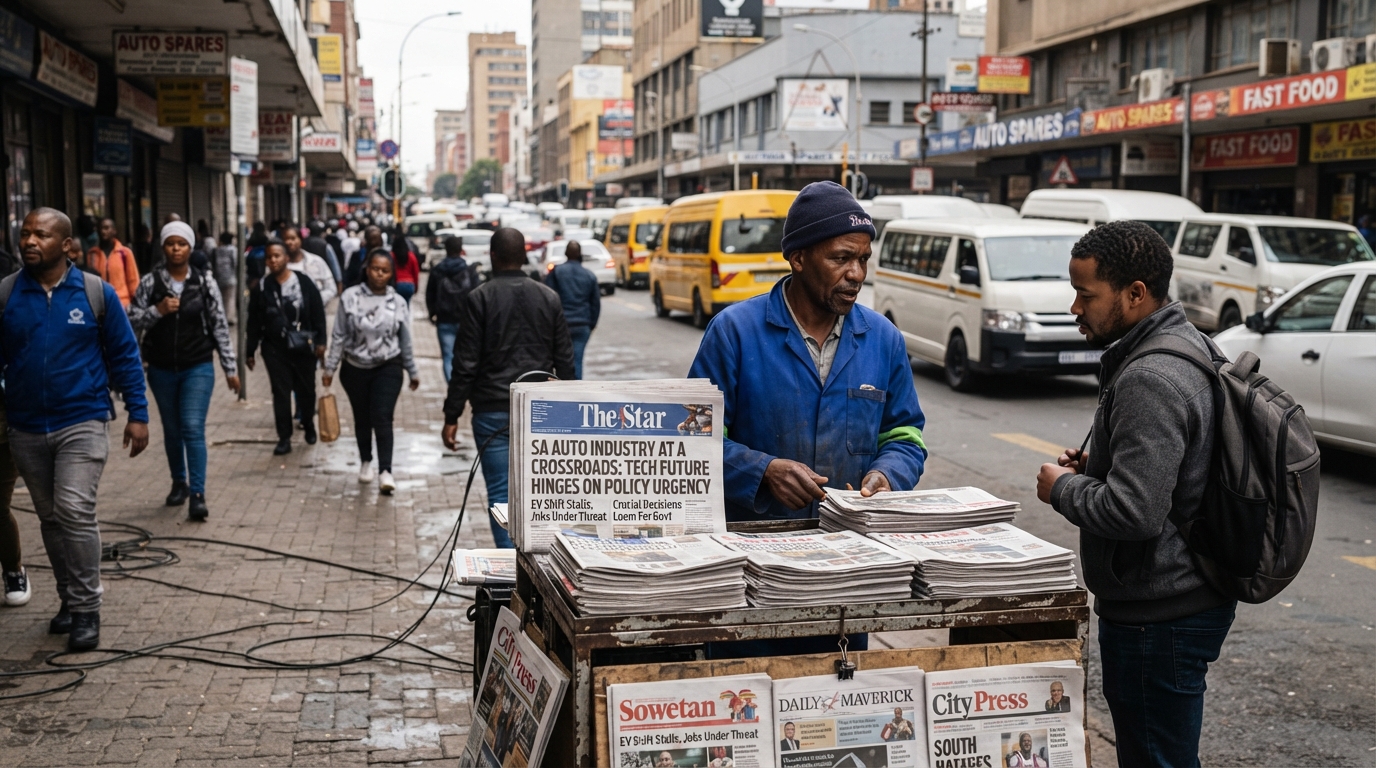
South Africa’s once-robust automotive manufacturing sector, a cornerstone of its industrial base, is facing an existential threat within the next five years, according to a stark warning from Bobby Ramagwede, CEO of the Automobile Association of South Africa. Ramagwede’s blunt assessment highlights a critical lack of clear policy direction, which risks stifling technological advancement and investment in the country’s auto-tech landscape.
The Looming Threat to Local Innovation
Ramagwede, speaking on TechCentral’s motoring show Watts & Wheels, did not mince words, suggesting that major players like BMW, Volkswagen, and Mercedes-Benz are re-evaluating their long-term commitment to South Africa. While manufacturers such as VW and Toyota have announced significant investments – R4-billion for a new compact SUV platform and R10.4-billion for the new-generation Hilux, respectively – these are often tied to global mandates and conditional on a stable, predictable policy environment. BMW, for instance, touts its R4.2-billion investment and the local production of the X3 plug-in hybrid for international markets, showcasing a clear capacity for advanced manufacturing. However, the increasing influx of imported vehicles, particularly from China, which saw its market share in cars and light commercial vehicles jump from 16.1% to 19.3% in a year, underscores the competitive pressure.
The policy vacuum creates uncertainty, making it harder for these global giants to justify further capital injection into cutting-edge production facilities, robotics, and digital integration that define modern automotive manufacturing. This is not just about assembly lines; it’s about the underlying technology that drives efficiency, safety, and future mobility solutions.
The EV Tipping Point and a Policy Hodgepodge
Ramagwede drew parallels with Thailand, where Chinese manufacturers have rapidly captured the electric vehicle (EV) market. This scenario presents a cautionary tale for South Africa, which is still grappling with its EV strategy. Without clear incentives for local EV production or a robust charging infrastructure plan, South Africa risks becoming a mere consumer of imported EV technology, missing out on the opportunity to build local expertise and intellectual property in a rapidly evolving global market. The AA CEO noted that factors like erratic electricity supply – a major concern for the energy-intensive auto sector and crucial for widespread EV adoption – and poor infrastructure further deter tech-driven investment.
Manufacturers like Ford, which exports its Ranger bakkie to over 100 markets from its Silverton plant, also face the looming specter of trade agreements that could shift production elsewhere if local conditions are not competitive. The industry, through Naamsa, views the 2027 budget speech as a “critical milestone” for policy clarity, emphasizing the need for a coherent strategy that supports local manufacturing and its inevitable pivot towards smarter, greener technologies.
The South Africa Angle
For South African consumers and professionals, the stability of the local automotive industry is not just about jobs; it’s deeply intertwined with the future of technology and connectivity in the country. A vibrant local manufacturing sector would drive investment in advanced robotics, IoT solutions for smart factories, AI in logistics, and even automotive software development – creating high-skill tech jobs. If the industry declines, South Africa risks becoming a technological backwater in auto production, merely importing vehicles that boast features and connectivity developed elsewhere.
From a consumer perspective, local manufacturing can influence the availability and pricing of new vehicle technologies, including hybrid and electric vehicles. A robust local industry could lead to more affordable and tailored EV options, along with the development of home-grown charging solutions and connected car services. Furthermore, the decline of a major industrial sector like automotive could have ripple effects on ancillary tech industries, from component suppliers to software development houses that support supply chains and vehicle diagnostics. Policy certainty isn't just about cars; it's about securing South Africa’s position in the global tech-driven manufacturing economy.
Source: TechCentral