
SA's AI Cybersecurity Breakthrough: Local Firm Reveals Financial Sector's Third-Party Vulnerabilities
A pioneering South African ethical hacking firm has leveraged an advanced AI-driven system to expose critical third-party data exposure risks within the…

In an increasingly interconnected digital world, the security perimeter of any organisation extends far beyond its own walls. This reality has been starkly illuminated by a recent, ground-breaking cybersecurity assessment conducted by a South African ethical hacking firm, Kingly Clark. Utilising an innovative AI-driven system, the firm has not only showcased the revolutionary potential of artificial intelligence in cybersecurity but also uncovered significant third-party data exposure risks for financial institutions, underscoring a critical need for advanced supply chain security across South Africa's tech and fintech landscape.
Traditional penetration tests typically involve human specialists meticulously probing a network over days or weeks. Kingly Clark's approach, however, represents a paradigm shift. Instead of a small team working manually, their AI-driven system was unleashed within a client company's environment, authorised to test its defences. This advanced AI didn't just look for obvious vulnerabilities; it was designed to autonomously navigate, 'read,' and comprehend the intricate web of digital assets.
The system systematically traversed internal email threads, document stores, login credentials on shared drives, client files, and invoice records. Crucially, it didn't stop at merely identifying these assets. It processed contracts, extracting client names, account references, and connected systems – essentially building a comprehensive blueprint of the business and its operational relationships. This ability to rapidly connect disparate pieces of information, treating a contract not just as a document but as a map to further connections, is where the AI truly revolutionises assessment speed and depth.
What the AI ultimately surfaced was data linked to one of South Africa's Big-Five banks. This finding is particularly significant because the bank itself was never the target. Its own systems were not attacked, probed, or breached. The data was accessible not through a failure of the bank’s own robust perimeter, but through the digital environment of a third-party supplier – a company the bank trusted with its information.
This incident serves as a powerful lesson in third-party or 'supplier risk,' a growing concern for businesses, especially those in the high-stakes financial sector. South African banks invest heavily in fortifying their internal cybersecurity defences, and rightly so. However, no financial institution operates in isolation. They are part of a vast ecosystem of suppliers, service providers, and partners, each representing a potential entry point for data exposure.
The AI system's ability to trace these connections highlights that a chain is only as strong as its weakest link. While a bank may secure its own doors, it has far less direct control over the security posture of its partners – their staff practices, shared drive configurations, or document management habits. This automated assessment bypassed the bank's 'wall' by simply following the established digital chain from an authorised starting point within a supplier's network.
Looking ahead, this breakthrough by a local firm not only demonstrates South Africa's growing prowess in AI and cybersecurity innovation but also points to the future of defence. Just as AI can be leveraged for highly sophisticated, rapid assessments and even adversarial actions, the same technology is being developed for proactive defence – AI agents designed to detect and respond to threats at machine speed. As the nation's tech and fintech sectors continue their rapid expansion, understanding and mitigating these complex, interconnected risks, especially those involving third parties, will be paramount for maintaining trust and stability in South Africa's digital economy.

SA Takes Centre Stage for Global Digital Future: ITU Plenipotentiary 2026
South Africa will host the 2026 ITU Plenipotentiary Conference, taking centre stage in global digital policy. Discover what this means for SA's connectivity &…

Editorial Decision: No Technology Angle Found in Source Article
As 'Tech in South Africa' editor, no technology story found in source about Soul Glo's 'Diaspora Problems' album. Outside publication scope.
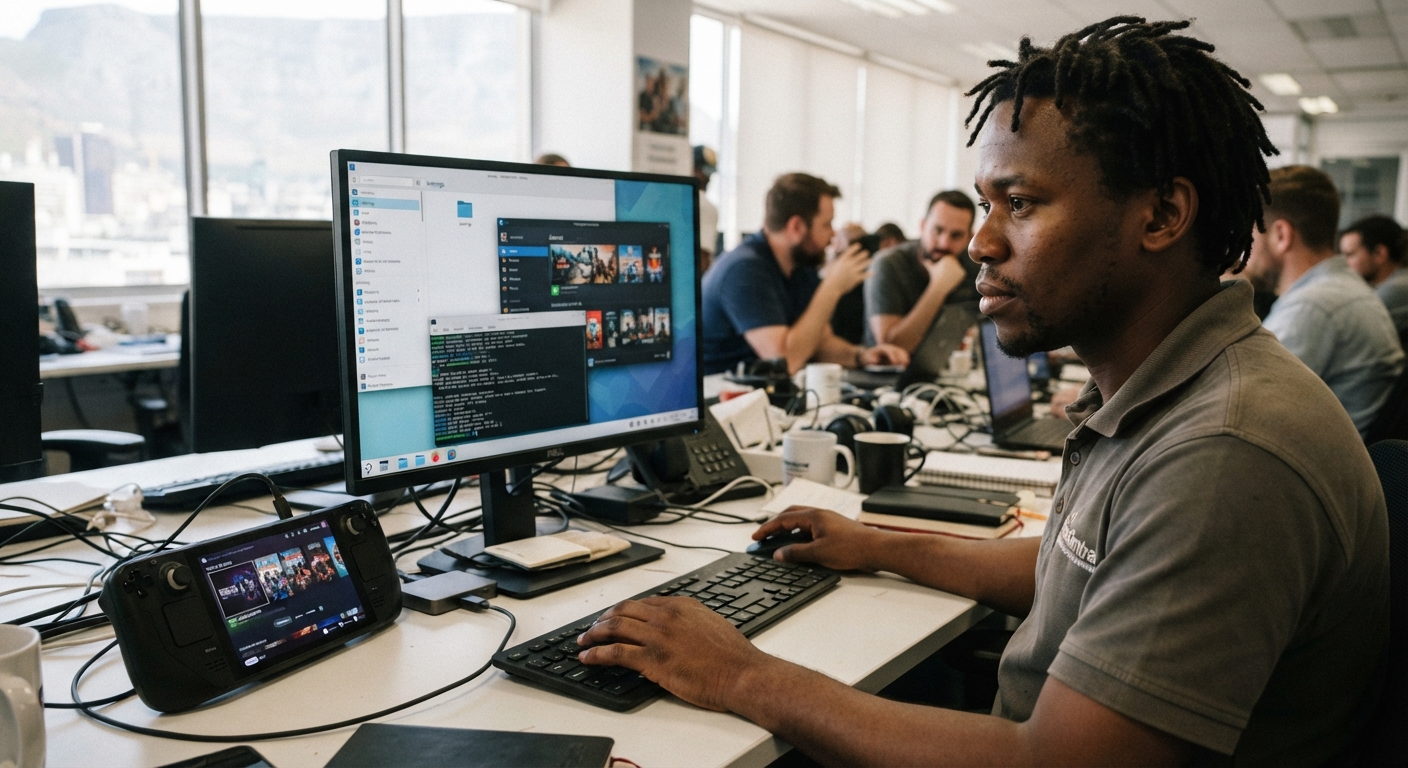
Epic Games Levels Up Linux Gaming: Steam Deck and Beyond Get Official Launcher Support
Epic Games brings official launcher support to SteamOS and Linux, widening game access for South African PC gamers and Steam Deck owners. Get local context…

Elon Musk: Decoding South Africa's Most Polarising Tech Export
Explore Elon Musk's tech legacy, from Tesla to Starlink, and its profound, sometimes complex, implications for South Africa's tech landscape and connectivity.

Cybersecurity Maverick: Stephen Ward's Pragmatic Vision Shapes Tech Investment
Stephen Ward, a unique cybersecurity VC, brings a no-nonsense investment approach. Explore his journey and what it means for South African tech and cyber…

From Hype to Halt: Tesla's Cybertruck Experiment Concludes
Tesla's polarising Cybertruck will cease production next year. We unpack its journey from wild reveal to market disappointment and its relevance for South…
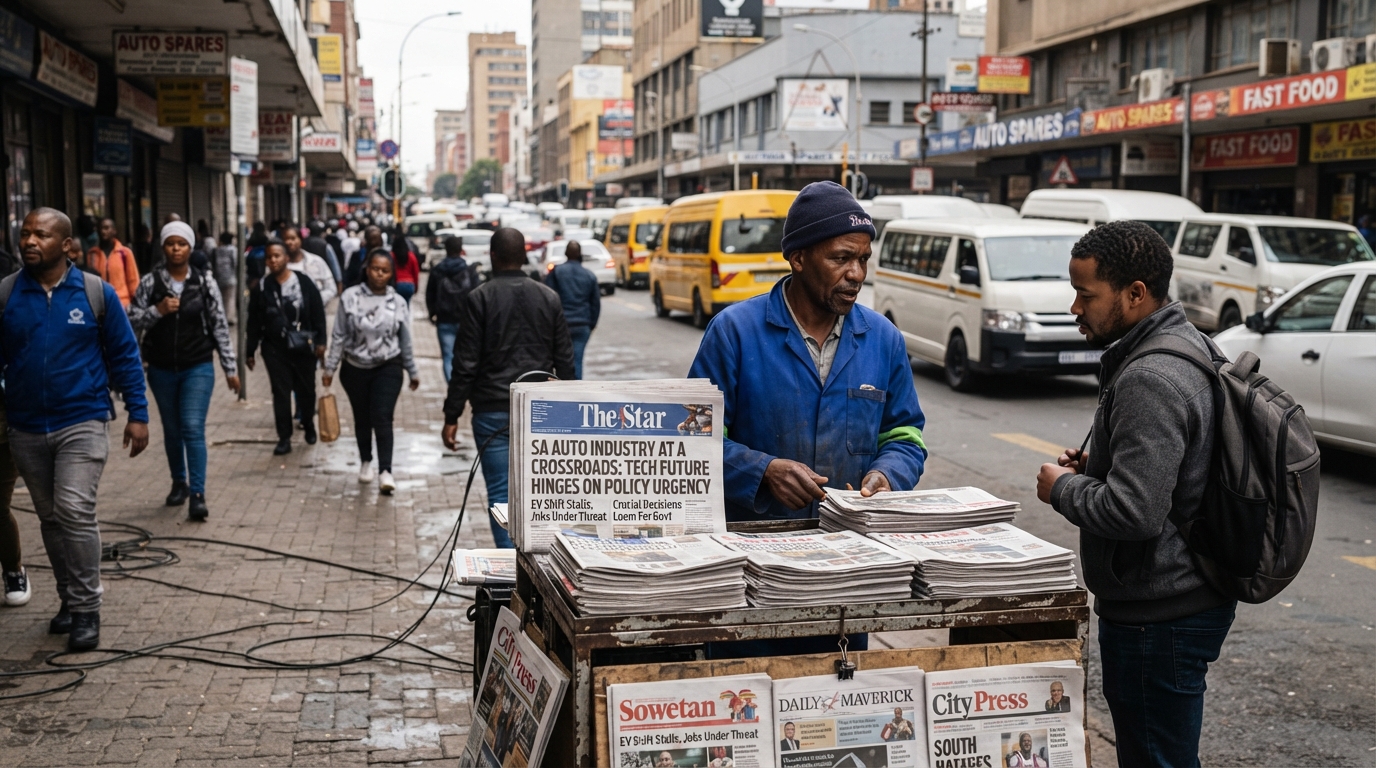
SA Auto Industry at a Crossroads: Tech Future Hinges on Policy Urgency
South Africa's auto industry faces decimation in 5 years without clear policy, threatening local EV adoption, tech investment, and skilled jobs.